ไทย
 中文 (中国)
 日本語


Have you ever felt that even a small scar can take away a lot of your confidence, so you don’t dare show your skin or dress the way you like? Scars, such as raised scars, keloids or surgical scars, worry many people, who often ask whether scars can be treated, or whether an old scar can still be treated. Today, scar revision surgery, or surgical scar correction, is a way to reduce the appearance of a scar so the skin looks smooth and close to natural, using advanced techniques such as scar excision combined with laser or tissue grafting, which help reduce the chance of the scar recurring and improve skin elasticity. If you are looking for where to have scar revision surgery, or wondering about the fastest way to get rid of a scar, read on to find the answers.

What causes scars??
Scars form when the skin is wounded or damaged, for example by an accident, surgery or infection. As the skin repairs itself, it builds new tissue to replace what was lost. In some cases, however, this new tissue is not as smooth as before, leaving a visible scar.
-
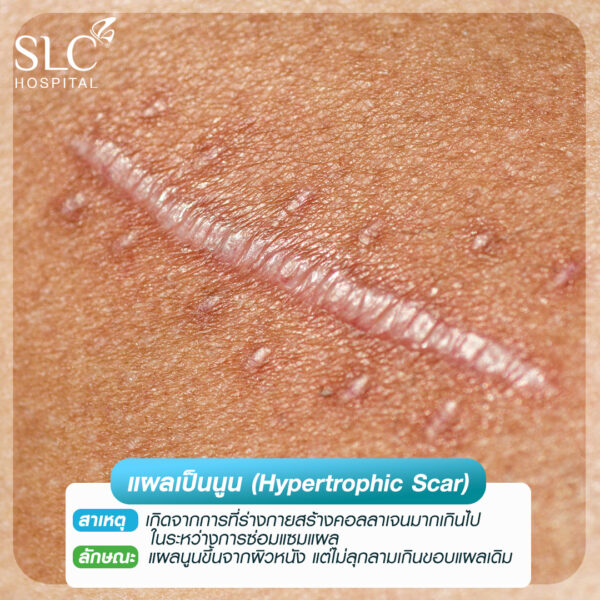
Raised scar (Hypertrophic Scar)
Cause: The body produces too much collagen while the wound is healing.
Appearance: The scar is raised above the skin but does not spread beyond the edges of the original wound.
-
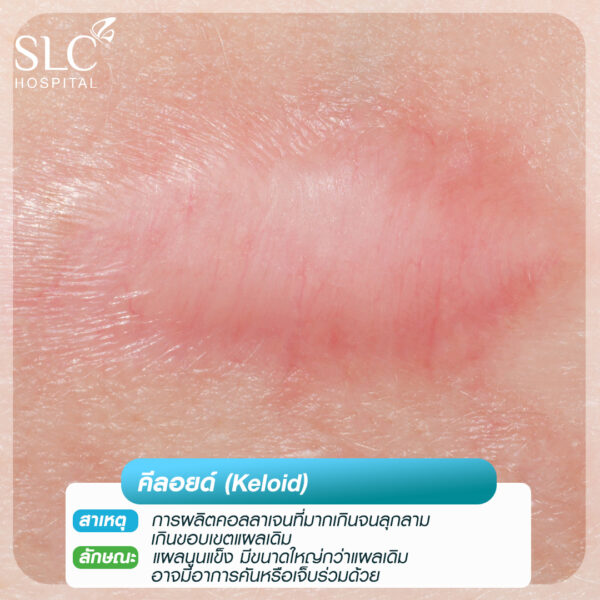
Keloid (Keloid)
Cause: Collagen is overproduced until it spreads beyond the edges of the original wound.
Appearance: A firm, raised scar that is larger than the original wound and may itch or hurt.
-
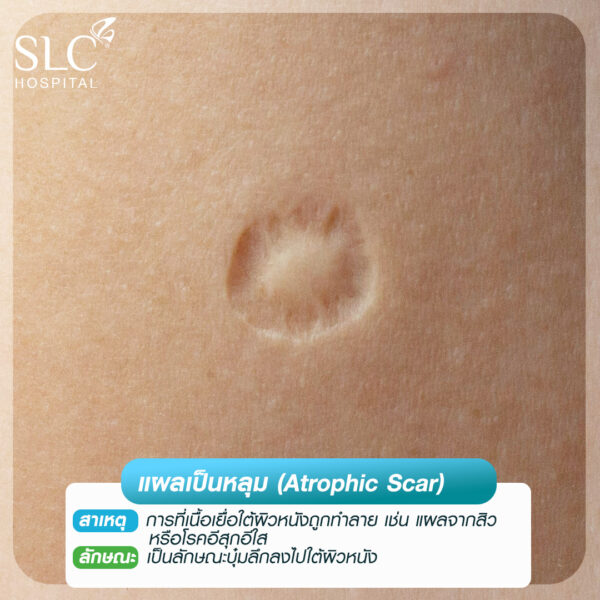
Depressed scar (Atrophic Scar)
Cause: Tissue beneath the skin has been destroyed, for example by acne or chickenpox.
Appearance: The scar is sunken below the surface of the skin.
-
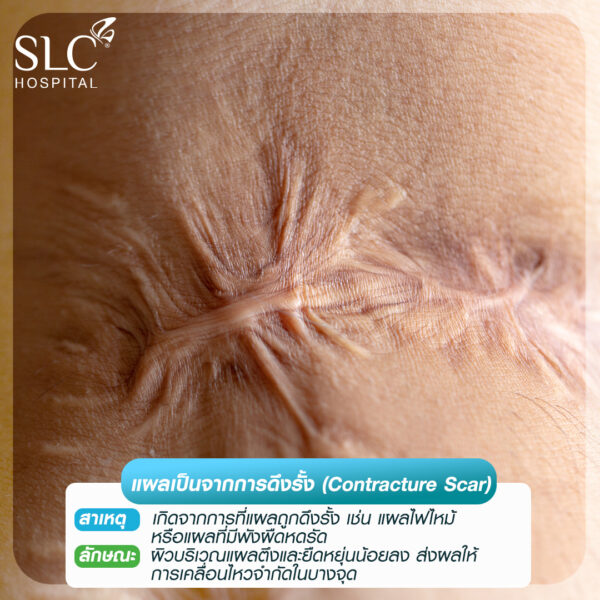
Contracture scar (Contracture Scar)
Cause: The wound has been pulled tight, for example a burn or a wound with contracting fibrous tissue.
Appearance: The skin over the scar is tight and less elastic, which can limit movement in some areas.
-
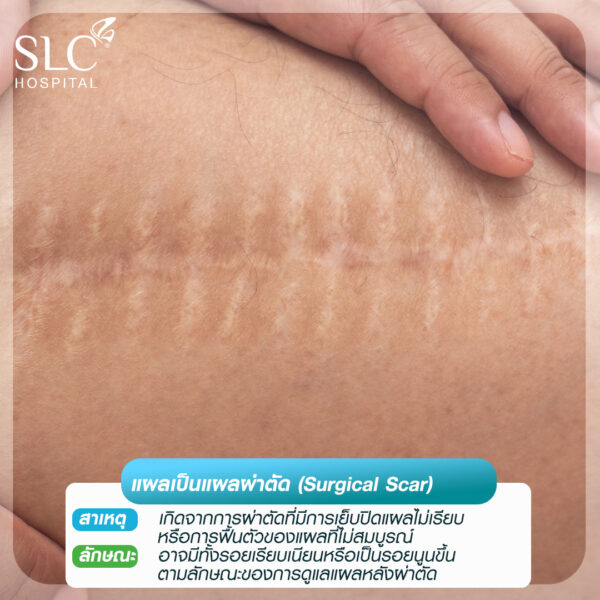
Surgical scar (Surgical Scar)
Cause: Surgery where the wound was not closed neatly, or where the wound did not heal completely.
Appearance: It may be smooth or raised, depending on how the wound was cared for after surgery.
Types of scars and how they are treated
1. Keloid scars
These form when the body produces too much tissue, so the scar grows beyond the original edges of the wound. They are red, raised and firm.
- Treatment: Scar excision combined with steroid injections to reduce inflammation
2. Raised scars (Hypertrophic Scar)
Similar to keloids, but they do not spread beyond the original edges of the wound. The scar is raised above the skin but partly fades on its own over time.
- Treatment: Surgical revision of the raised scar, combined with silicone gel sheets or laser
3. Depressed scars (Atrophic Scar)
These form when skin tissue is destroyed, leaving a deep pit. They are often caused by acne or accidents.
- Treatment: Filler injections, fat grafting, or laser to stimulate collagen
4. Scars from accidents or surgery
These scars vary depending on their size and depth, and may be either raised or depressed.
- Treatment: Scar revision or laser, combined with ongoing skin care
Treating each type of scar requires a diagnosis by a specialist surgeon to find the most suitable approach. If you are looking for further options, you can consult SLC Hospital.
Steps in scar revision surgery
The scar revision surgery improves the appearance of a scar so it looks smooth and close to natural skin. The steps are as follows:
- Scar assessment The surgeon analyses the type of scar, such as a keloid, raised scar or depressed scar, to choose the right technique.
- Excision of scar tissue For raised scars or keloids, the surgeon removes the scar tissue while trying not to damage the surrounding tissue.
- Re-suturing the wound The surgeon uses a hidden-suture technique so the new scar is as inconspicuous as possible.
- Supporting treatments After surgery, supporting treatments may be used, such as:
- Laser to reduce redness and stimulate collagen production
- Silicone gel sheets or steroid medication to reduce the chance of the scar recurring
- Aftercare Patients must care for the wound as the doctor advises, for example avoiding heavy lifting or touching the wound directly, so it heals fully and the chance of the scar recurring is reduced.
Who is suitable for scar revision surgery??
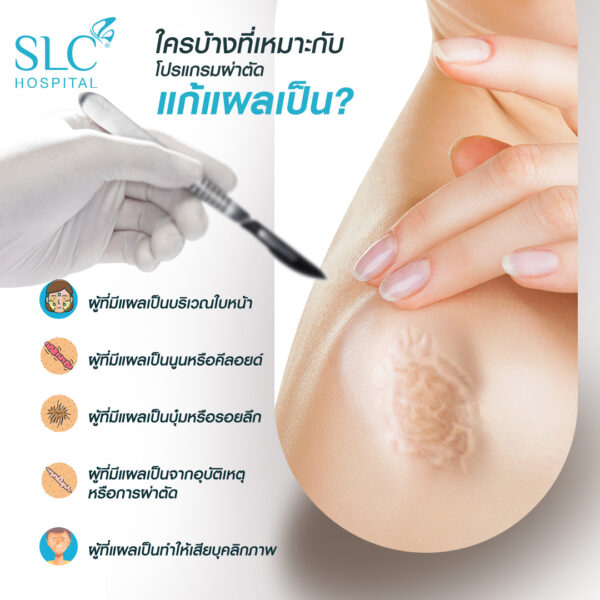
The scar revision surgery is suitable for people who want to improve a scar that affects their appearance or daily life. People who should consider treatment include:
- People with scars on the face or other easily visible areas, such as the neck, arms or legs, that make them feel self-conscious about their appearance
- People with raised scars or keloids that are bothersome, for example itchy or painful
- People with depressed scars or deep marks that make the skin uneven and look out of proportion, for example on the face or the back of the hands
- People with scars from accidents or surgery that cause physical problems, such as scars that pull on muscles or joints and make movement difficult
- People whose scars affect their image or get in the way of their work, such as jobs that involve meeting people
Results and benefits of scar revision surgery
After scar revision surgery is complete, the scar looks lighter and the skin where it was becomes smoother and blends in better with the surrounding skin, especially when a hidden-suture technique (Hidden Scar Technique) is combined with laser or silicone scar sheets during recovery. The main benefits are:
- The scar looks lighter and is less likely to form fibrous tissue again, with proper wound care
- Smoother skin restores confidence for people with scars in clearly visible areas
- Less skin discomfort such as itching or tightness around raised scars
- Modern techniques help you recover quickly with no long downtime, so you can return to daily activities within a short time
- Lower chance of the scar recurring thanks to effective aftercare, such as warm or cold compresses and silicone sheets to reduce scarring
Finally, a scar is not just a skin problem you have to accept for life; it can also seriously affect your confidence and image. Scar revision surgery is one of the cosmetic procedures that helps restore the skin so it looks smoother and more attractive, whether for keloid scars or raised scars from surgery or accidents. Scar excision techniques, combined with newer innovations such as scar-reducing laser or silicone scar sheets, help bring the skin as close to natural smoothness as possible. Scar surgery is not only a treatment; like other cosmetic procedures such as skin lifting or facial augmentation, it improves your image and boosts your confidence. After surgery, the scar looks lighter and the skin regains elasticity and smoothness. And for anyone asking whether scars can go away, or whether an old scar can still be treated, the answer is that modern surgical techniques can correct them effectively while helping the skin look better in every way. Don’t let a scar keep wearing down your confidence. Come and consult SLC Hospital, a full-service cosmetic surgery centre ready to give you back your confidence without disappointment.